K-Space Night unites 13 Korean space startups in Bremen to present cutting-edge technologies, meet investors, and explore opportunities across Europe.
Held at the Courtyard by Marriott Bremen, often called the “City of Space”, the sold out K-Space Night brought together 13 Korean space startups, European industry leaders, and investors. Organized alongside the Space Tech Expo Europe 2025, the event offered a focused setting for technology showcases, insights into ongoing space projects, and collaborative exchanges aimed at accelerating market entry and fostering long-term partnerships in Europe’s dynamic space ecosystem.
Korean space startups have become an increasingly influential force, driven by strategic national support and an ambition to expand globally. At the core of this ecosystem stands the Ministry of SMEs and Startups, jointly hosting the event, and the Korea Aerospace Administration (KASA), whose leadership is instrumental in guiding Korea’s space ambitions.
Together with the organizer, the Korea Institute of Startup & Entrepreneurship Development (KISED), these institutions aim to accelerate European market entry, expand commercial opportunities, and foster sustained cooperation with major aerospace and defense organizations. Their involvement created the foundation for K-Space Night’s mission: bringing startups, investors, corporations, and key ecosystem partners into one room. They set the stage for the invitees to make a very strong impression on the Startup World Tech team.
A gathering of Korea’s Most ambitious space innovators
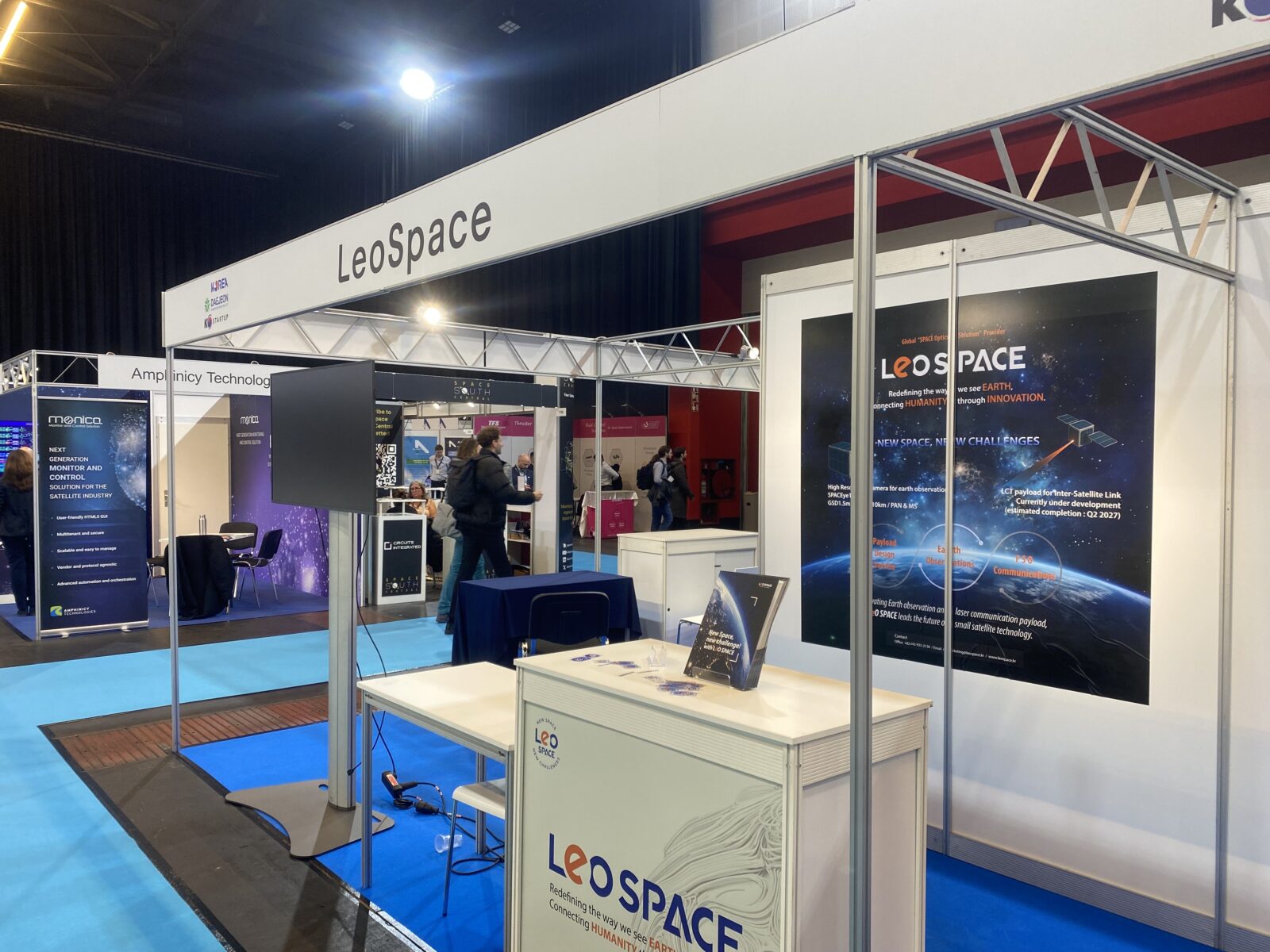
K-Space Night brought together a powerful cross-section of Korea’s fast-growing space startup ecosystem, each offering a unique piece of the technology needed for the next era of orbital infrastructure. The room filled quickly with founders and engineers representing high-precision manufacturing, satellite data services, optical systems, propulsion, space communications, and AI-driven operations. Companies like CONTEC Space Group, with its global ground-station network, and NARA SPACE, with its 16U small-satellite platform, were invited alongside advanced hardware developers such as MADDE, known for high-purity SiC 3D printing, and MID, providing multilayer bonding technologies for semiconductors. Others presented highly specialized capabilities, from telePIX’s star trackers and GTL’s triple-band antennas to DALRO Aerospace’s lightweight launch tubes and INTERGRAVITY’s lunar hopper technologies.
Throughout the evening, the diversity of innovation became clear as the invited companies each held three-minute pitches. Three among them especially stood out as highlights of the night:
1. Green Optics is a full-spectrum optical solutions provider with end-to-end capabilities that span optical design, precision polishing, coating, assembly, and system evaluation. Its technologies serve a wide range of industries, including semiconductors, flat-panel displays, energy, and biotechnology. The company maintains a strong specialization in lightweight, high-strength optical components engineered to withstand the extreme conditions of space.
What makes Green Optics particularly remarkable is its ability to translate deep R&D expertise into advanced space technologies. This is exemplified by its co-development of the first LAF-TMS–based telescope with the Korea Astronomy and Space Science Institute (KASI), demonstrating exceptional optical performance and alignment precision. Supported by cross-departmental task force teams, global partnerships across major technology markets, and a strategic focus on next-generation space optics, Green Optics has emerged as a key innovator accelerating progress in satellite imaging and exploration systems.
2. UZURO Tech develops compact propulsion and post-mission disposal solutions that support sustainable space operations. Its core product, the Plate-Type Thruster (PTT), is a chemical propulsion system designed to safely de-orbit micro-satellites at the end of their missions, enabling controlled re-entry through simple ground-command activation. Beyond propulsion, UZURO offers COSMOS, a web-based SaaS platform for precise orbit determination, collision-avoidance assessment, and ongoing satellite monitoring. The company also advances passive RF-based Space Domain Awareness (SDA) technology to improve traffic management, threat detection, and overall orbital safety.
What makes UZURO Tech a standout is its clear vision of shaping the future of satellite operations, captured perfectly in a statement at K-Space Night: “Let there be one satellite and there will be many satellites.” The company is rapidly emerging as a leader in sustainable space development, strengthened by its selection for Korea’s prestigious Deep Tech TIPS R&D program under the Super Gap Startup 1000+ initiative, securing a $1.5M grant to accelerate SDA innovation. Since 2023, UZURO Tech has focused on satellite disposal systems and precise orbit prediction software, positioning itself at the forefront of safer, cleaner, and more responsible space traffic management.
3. LeOSPACE develops high-resolution optical cameras for low-Earth-orbit satellites and researches free-space laser communication modules designed for high-speed, high-capacity satellite links. Founded in 2021, the company focuses on practical, R&D-driven solutions for modern space missions, including “plug-and-play” optical systems that simplify integration for CubeSats and SmallSats. At K-Space Night, CEO and founder Albert H. K. Lee presented the company’s vision and technology roadmap, emphasizing its commitment to “Redefine the way we see earth, and connecting humanity through innovation”.
Despite being a relatively young company, LeOSPACE has demonstrated not only passion but also significant technical experience and a clear competitive edge. Its mission to commercialize advanced optical technologies for the fast-growing small-satellite market positions it at the forefront of accessible, next-generation space hardware.
Together, the attending companies painted a vivid picture of a national ecosystem ready to compete globally, each contributing to a complete chain of technologies for next-generation space missions. Even Ansys, an international leader in advanced engineering simulation, joined the event to share perspectives on how simulation tools support mission design and safety, further reinforcing the event’s cross-border spirit of technical exchange.
A meeting point between Korea’s Startup ambition and Europe’s research and investment community
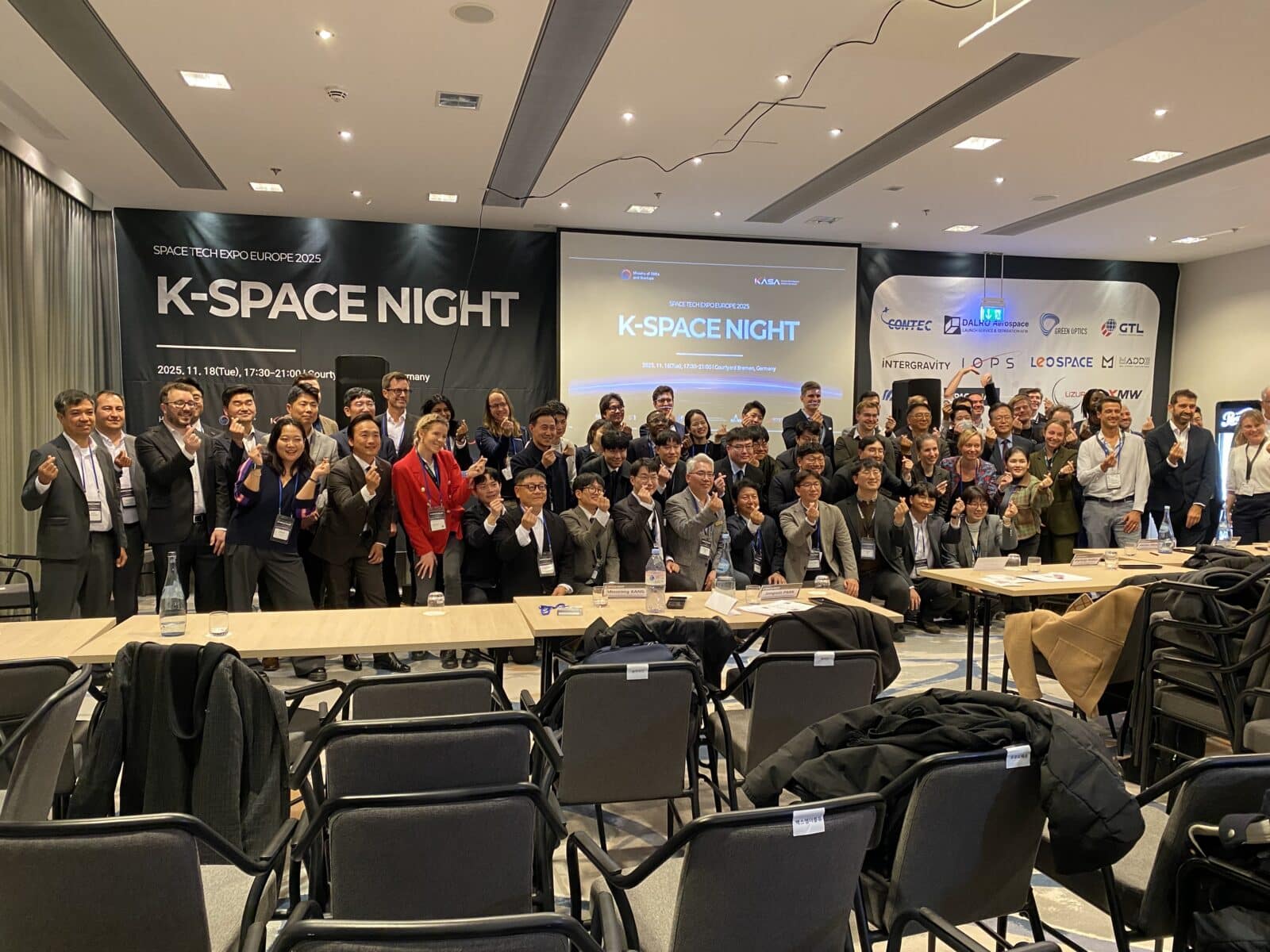
Beyond the impressive technology, the heart of K-Space Night was the meeting of two worlds: Korea’s rising space innovators and Germany’s research and investment community. From the opening speeches, the message was clear: this was a historic moment, the first time such an event took place in Bremen, one of Europe’s most concentrated hubs for aerospace activity. The gathering reflected Korea’s determination to expand globally and the essential role its startups play as the country pushes into an increasingly competitive market. Support from national institutions was repeatedly emphasized, highlighting how government programs help these companies innovate faster and enter foreign markets with confidence.
German and European stakeholders welcomed the Korean delegation warmly. Insights from acitoflux provided practical pathways into the German market, including how to navigate investment opportunities and scale technology ventures across Europe. ESA contributed its perspective on financing and long-term mission development, underscoring the shared opportunities ahead. Berlin Partner added a regional dimension, presenting Berlin’s dynamic aerospace landscape, its innovation-driven ecosystem, and upcoming opportunities such as ILA Berlin. The evening concluded with a networking dinner, where researchers, investors, government representatives, and founders built personal connections, transforming a packed agenda into the beginning of what speakers repeatedly called meaningful and lasting cooperation.
K-Space Night ultimately became more than a showcase; it was a bridge between Korea’s rapidly advancing space industry and Europe’s established research and investor networks. The event demonstrated not only the technical strength of Korea’s startups, but also the openness and encouragement they received in Germany, supported by continued backing from Korean institutions. In this atmosphere of shared ambition, the groundwork was laid for collaborations that may define the next decade of space innovation.